Exercise · Cardio · Tier-A longevity medicine
Cardio — Zone 2, VO₂max, REHIT
Cardiorespiratory fitness has the largest documented all-cause-mortality reduction of any longevity input. In the Mandsager 2018 JAMA cohort (PubMed), elite fitness was associated with a 5-fold lower mortality vs. low fitness across 122,007 patients — larger than the effect of quitting smoking, treating diabetes, or controlling hypertension.
Zone 2 — what counts and what doesn't
"Conversational pace" is the practical heuristic. You should be able to hold a sentence at a time, not a full conversation, not just gasping. Physiologically Zone 2 sits at the first lactate threshold — blood lactate ~1.5–2 mmol/L for most trained adults.
Practical Zone 2 markers (pick one and stay disciplined):
- Heart rate: ~70% of HRmax, or 60–70% of HR reserve. Most accurate if you have lactate or VO₂max-tested zones.
- RPE 4–5/10. Easy enough to nasal-breathe most of the session.
- Talk test: can speak 4–6 words at a time without strain.
If your heart rate creeps over your Zone 2 ceiling, slow down — many people accidentally train Zone 3, which is "junk miles" from a longevity perspective: too hard to be sustainable, too easy to drive VO₂max.
VO₂max intervals — Norwegian 4×4 vs REHIT
Both are well-studied. Pick the one you'll actually do.
- Norwegian 4×4. 4 minutes at ~90% HRmax / 4 minutes easy, repeated 4 times. Total session ~40 min including warm-up. Validated in heart failure, fatty liver, metabolic syndrome cohorts.
- REHIT. 2 × 20-second all-out sprints inside a 10-minute total session (rest of session is very easy spinning). Shown to raise VO₂max and improve insulin sensitivity in just 6 weeks at 3 sessions/week (Metcalfe 2019 — Eur J Appl Physiol, PubMed). This is the protocol used in CAROL Bike's "Intense" session.
For most longevity-focused adults, 1 high-intensity session per week is the right dose. Two is fine for trained athletes; three is overkill and raises injury risk.
Heart-rate monitors — gear picks
Wrist-based optical sensors (Apple Watch, Fitbit) under-read at higher heart rates and during arm-driven exercise. For accurate Zone 2 training, a chest strap or upper-arm optical band is worth the small cost. We list two picks below.
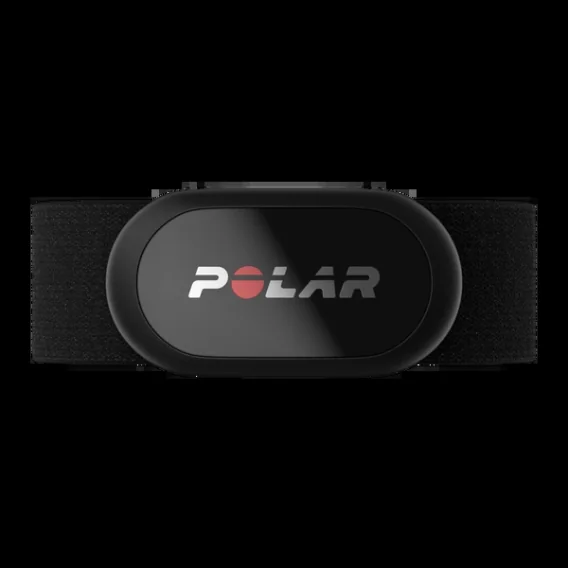
Polar H10 — chest strap
Long-standing reference standard. Bluetooth + ANT+ dual, syncs with virtually every bike computer, fitness app, and watch. The most validated consumer HR sensor in peer-reviewed studies. Replace the elastic strap every 12–18 months for best fit.
Shop Polar H10 ↗

WHOOP — 24/7 fitness tracker
For users who want continuous HR + sleep + HRV tracking without staring at a watch. Optical sensor is good enough for Zone 2 once calibrated and a generally fine recovery-tracking layer. Subscription model. Not as accurate as a chest strap at high intensity.
Shop WHOOP ↗
Both devices are halachically neutral on weekdays. For Shabbat use, consult your rav — most poskim discourage active electronic devices on Shabbat, but passive battery devices already worn before Shabbat fall into a separate discussion. There is no kashrut issue with HR monitor straps themselves.
FAQ
How do I find my Zone 2 if I haven't been tested?
The "talk test" is the most reliable field marker — 4–6 words per breath without strain. Heart rate of 180 minus your age in years is a reasonable starting estimate; refine it after a few weeks based on how the talk test feels at that HR.
Is walking enough? Or do I need to run?
Walking briskly can reach Zone 2 for deconditioned adults. For most reasonably fit adults, brisk walking lands in Zone 1 — fine for general activity, not enough for the mitochondrial adaptation. Bike, row, swim, or run for true Zone 2.
What if I have a joint problem?
Bike, row, swim, or use an elliptical. The cardiovascular adaptation is mode-agnostic; the cardiovascular system doesn't care what's pumping the blood.
Should I do intervals fasted?
No clear longevity benefit and a real risk of underperforming the session. Eat a small carb-protein meal 60–90 minutes before. Zone 2 fasted is fine.