Exercise · Strength · Tier-A longevity medicine
Strength — hypertrophy, power, sarcopenia prevention
Muscle mass and grip strength are independent predictors of all-cause mortality. After age 50, you lose roughly 1–2% of muscle mass per year and 3% of strength per year unless you actively defend it. Sarcopenia — clinical muscle loss — is now formally recognized as a disease (ICD-10 M62.84). Resistance training is the only intervention that reliably reverses it.
The dose-response
From the 2022 Momma BJSM meta-analysis (PubMed) of 16 prospective cohorts:
- 30–60 minutes/week of resistance training is associated with a ~17% lower all-cause mortality risk.
- Combined with aerobic exercise, the effect is additive and clinically meaningful.
- The dose-response curve plateaus and may slightly reverse beyond ~140 min/week of resistance work — more is not better for longevity.
Translation: two to four 30–45 minute resistance sessions per week is the longevity-optimal dose. You do not need to live in the gym.
The minimum effective program
A complete longevity strength program covers six fundamental movement patterns. You can run this with a barbell, dumbbells, kettlebells, or machines — the patterns are what matter, not the equipment.
| Pattern | Examples | Sets × reps (working sets) |
|---|
| Squat | Back squat, front squat, goblet squat, leg press | 3 × 6–10 |
| Hip hinge | Deadlift, RDL, kettlebell swing, hip thrust | 3 × 5–8 |
| Horizontal push | Bench press, push-up, dumbbell press | 3 × 8–12 |
| Horizontal pull | Row variants, inverted row, seal row | 3 × 8–12 |
| Vertical push | Overhead press, landmine press | 2 × 6–10 |
| Vertical pull | Pull-up, lat pulldown, banded pulldown | 2 × 6–12 |
Add carries (farmer's walk, suitcase carry) and one explicit power exercise (kettlebell swing, jump squat, or medicine-ball slam) for grip strength and rate-of-force-development — both decline fastest with aging and both predict falls.
Protein — the partner to lifting
Resistance training without adequate protein produces muscle damage without muscle gain. The current consensus dose for adults over 40 is 1.6–2.2 g/kg/day of protein, distributed across 3–4 meals containing 30–40 g each (Morton 2018 — Br J Sports Med, PubMed).
The leucine threshold (~2.5–3 g per meal) is what triggers muscle protein synthesis. Whey, casein, eggs, fish, and beef hit it easily; plant proteins often need a slightly larger dose. See our supplements rankings for kosher-certified whey and creatine picks — creatine is the only supplement with a Tier-1 evidence rating for muscle gain.
Home strength gear — picks
A complete home strength program needs less equipment than most people think. Two adjustable dumbbells and a single moderately-heavy kettlebell will cover most movement patterns for years.
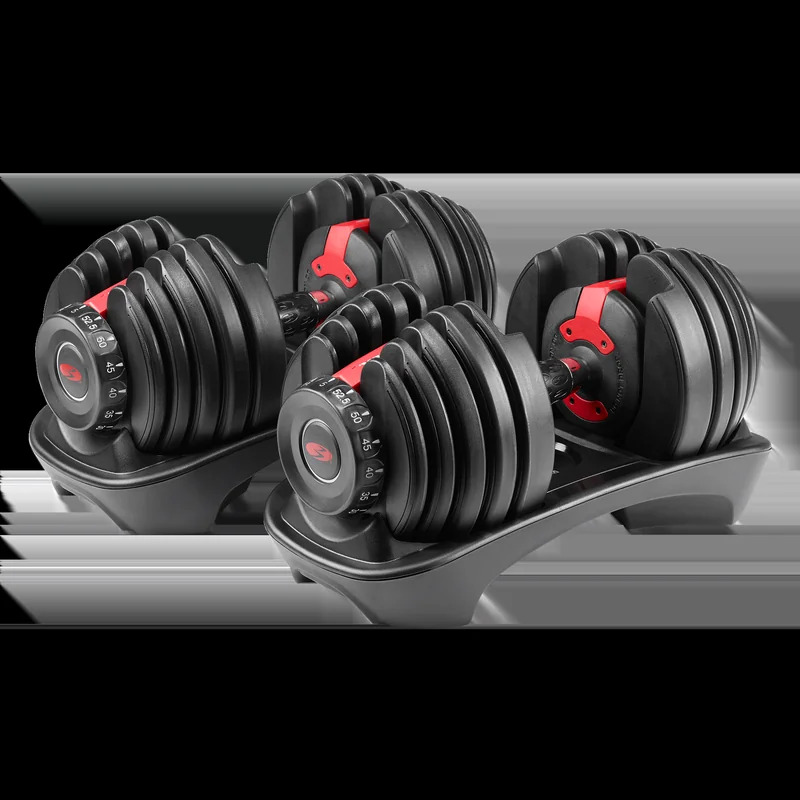
Bowflex SelectTech 552 — adjustable dumbbells
Replaces 15 pairs of dumbbells with a single set that adjusts 5–52.5 lbs in 2.5-lb increments. The standard for home strength training over the last decade. Sturdy enough for serious training; quiet, fast to adjust between exercises.
Shop Bowflex ↗
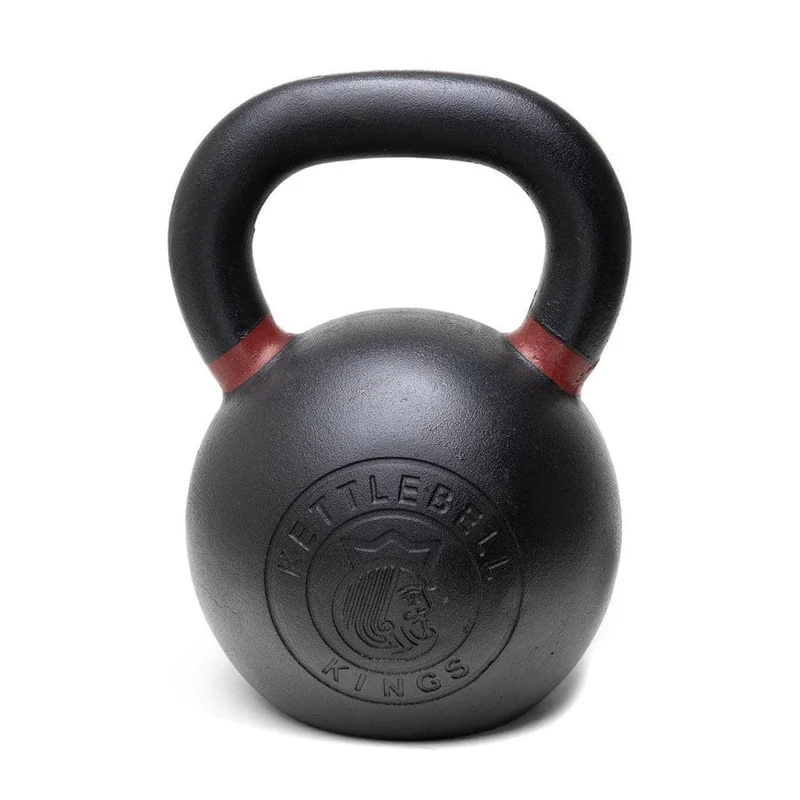
Kettlebell Kings — powder-coat kettlebell
A single 16 kg (men) or 12 kg (women) bell covers swings, goblet squats, Turkish get-ups, and carries — the entire kettlebell longevity toolkit. Powder-coat finish for grip without tearing skin. Add a heavier bell as you progress.
Shop Kettlebell Kings ↗
No kashrut or halacha issues with strength equipment itself. As with all training, plan strenuous sessions on weekdays — most poskim exclude formal strength training on Shabbat and Yom Tov.
FAQ
I'm new — should I start with dumbbells or kettlebells?
Adjustable dumbbells are more versatile for a complete program. A single kettlebell is excellent for swings, goblet squats, and carries — high return for the cost. Most home setups end up with both.
What about machines?
Machines are fine, especially for newer trainees, for isolation work, and after injury. Free weights generally produce better whole-body coordination and balance carryover, but the difference for longevity outcomes is small.
Do I need a trainer?
For the deadlift, kettlebell swing, and back squat — yes, at least for a few sessions. These three lifts have the highest injury rate when self-taught. Everything else can be learned from credible video.
Is creatine worth it?
Yes — creatine monohydrate has the strongest evidence base of any supplement for muscle gain and is increasingly studied for cognitive aging. See the supplements rankings for kosher-certified options.